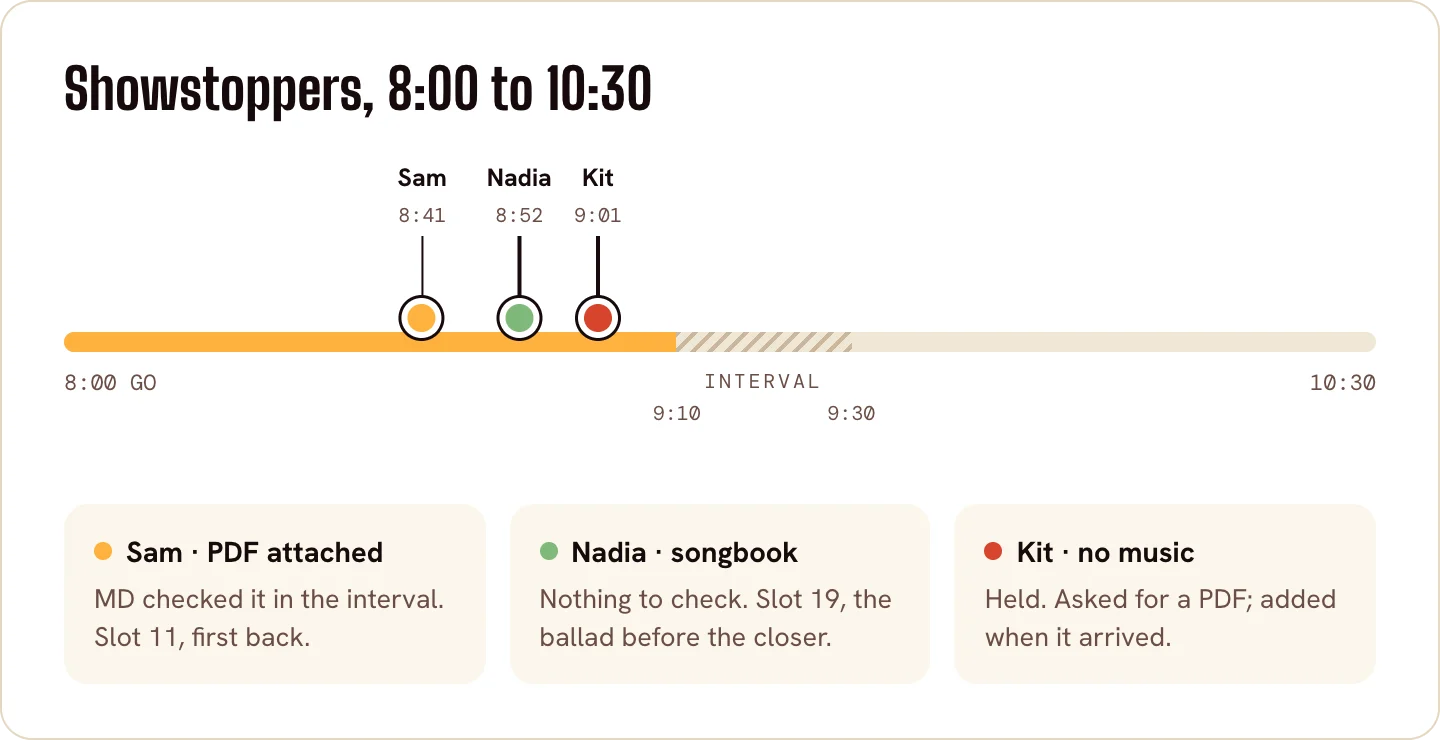
Late sign-ups, the ones that arrive after the show starts, are the riskiest items on your list. Everything that came in before doors had time (and some degree of planning) on its side: you read it, fixed the spelling, checked the song, made sure you have the sheet music. A sign-up that lands at 40 minutes into the show, while you are introducing the next act, gets none of that, and if your list is on the venue TV, whatever was typed is what everyone sees. Review first, then add.
The mid-show sign-up problem
Most advice about open mic sign-ups is written for performers, and it says one thing: get there early. Backstage.com says it plainly: "Most often, open mics will require performers to show up 15-30 minutes early to put their name on a list." It does nothing for the host when a name arrives mid-show anyway, and one always does.
A paper sheet never had this problem, because the room could not read it. Once the list is on a screen, every sign-up is publishing, and a mid-show sign-up is publishing with no editor. Three things go wrong, and the whole room sees them:
- The wrong name. A typo, a nickname, or a stranger at the bar who typed something for a laugh.
- The duplicate. A friend signed them up as well, or the phone resubmitted the form.
- The wrong song. A title the accompanist has no music for, or a song someone performed twenty minutes ago.
None of these matter if a host reads the sign-up before the room does.
Review, then add
The rule is one sentence: no sign-up that arrives after the show starts goes to the screen until a human has read it. The mechanics work on paper, in a spreadsheet or in software.
- Keep two lists. The running order is what the room sees; the holding list is what arrived.
- Read the holding list between acts, never during one. Can you say this name into a microphone; can you play this song; is this person already on the list.
- Add it, fix it, or decline it. Declining is normal.
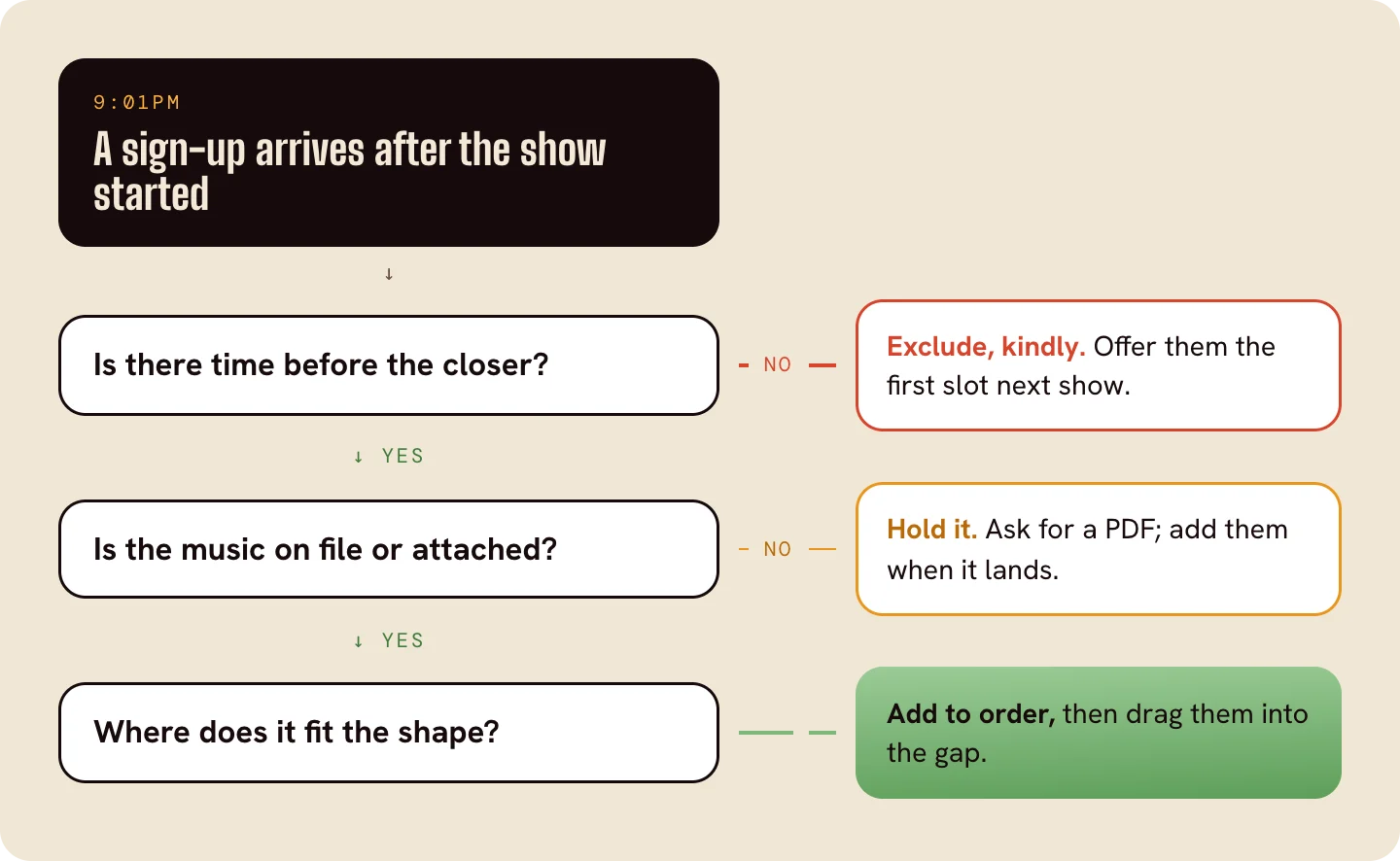
On StageQueue, this split is built in. Before a show starts, sign-ups in Front Row go straight into the running order, because you have time to read and vet them before opening things up.
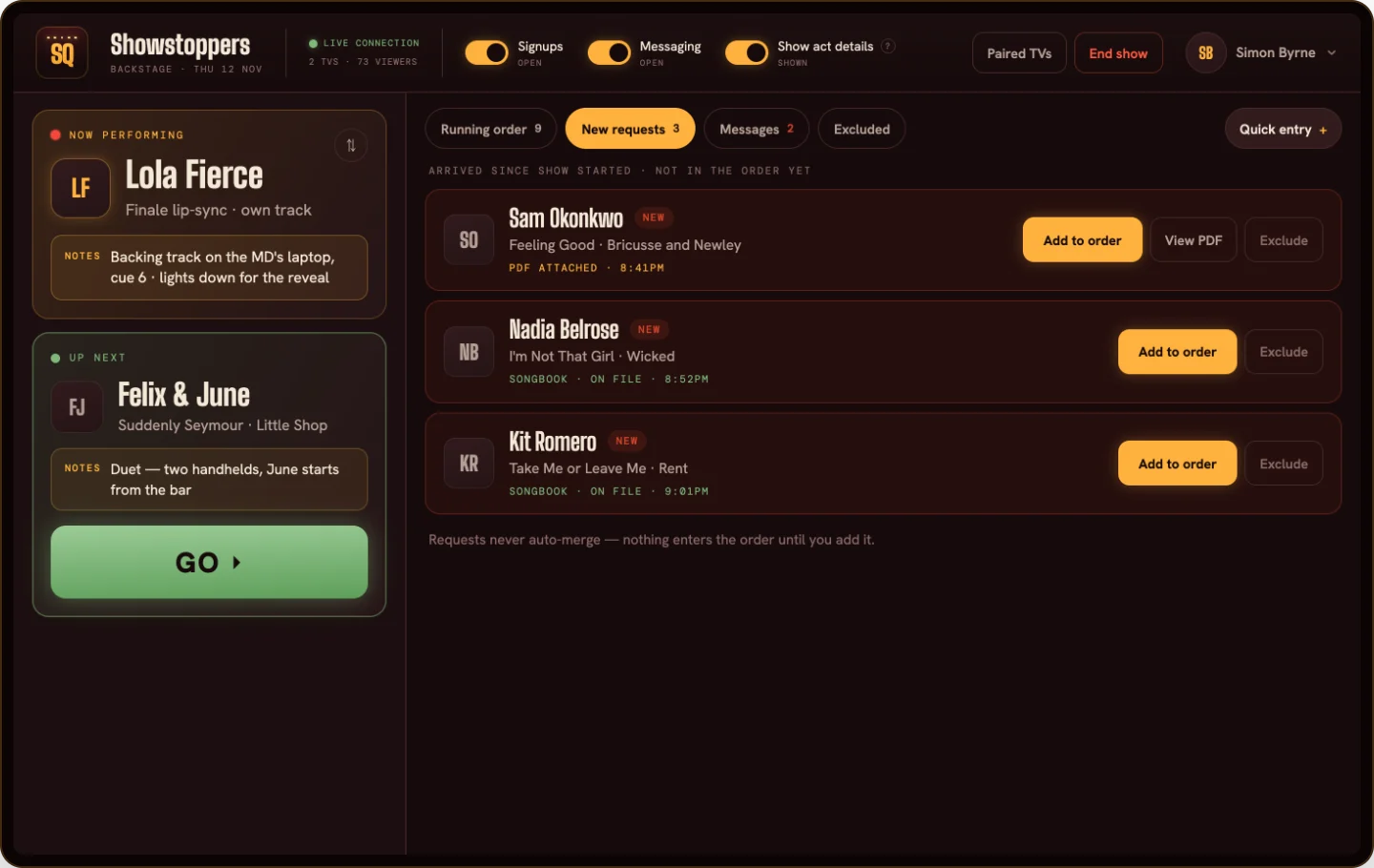
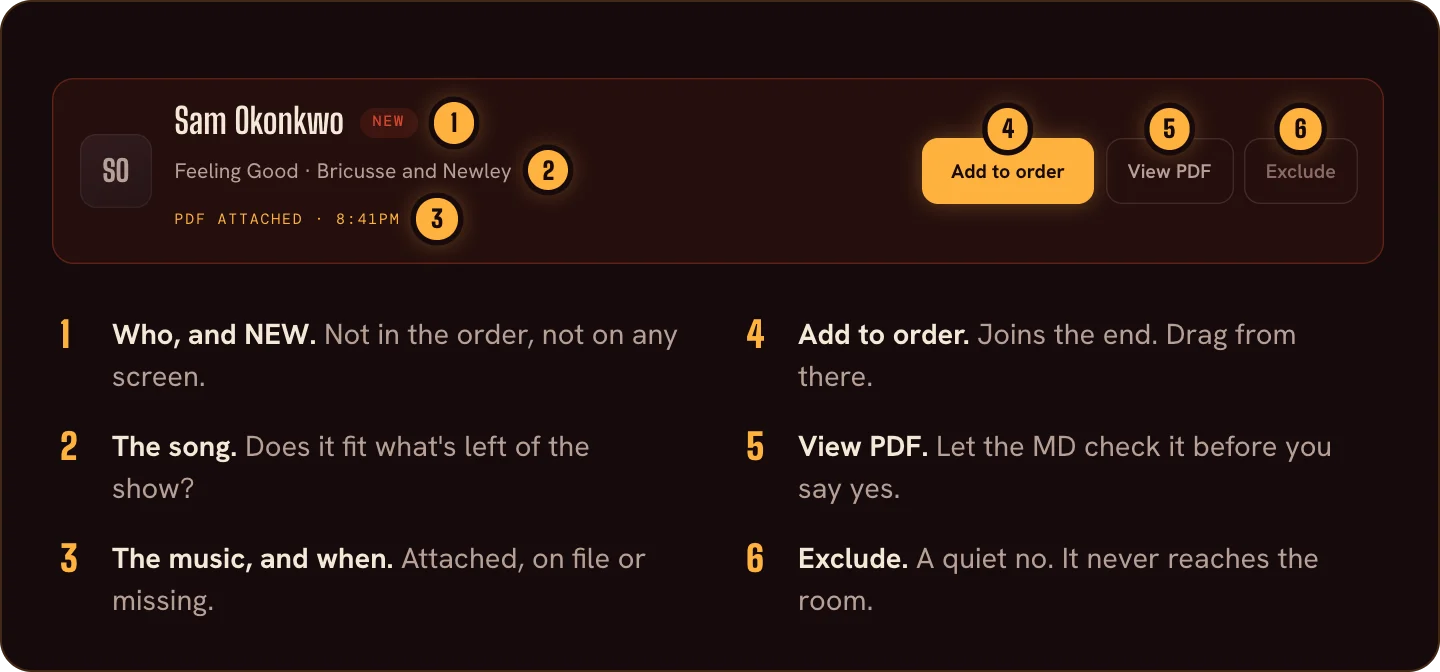
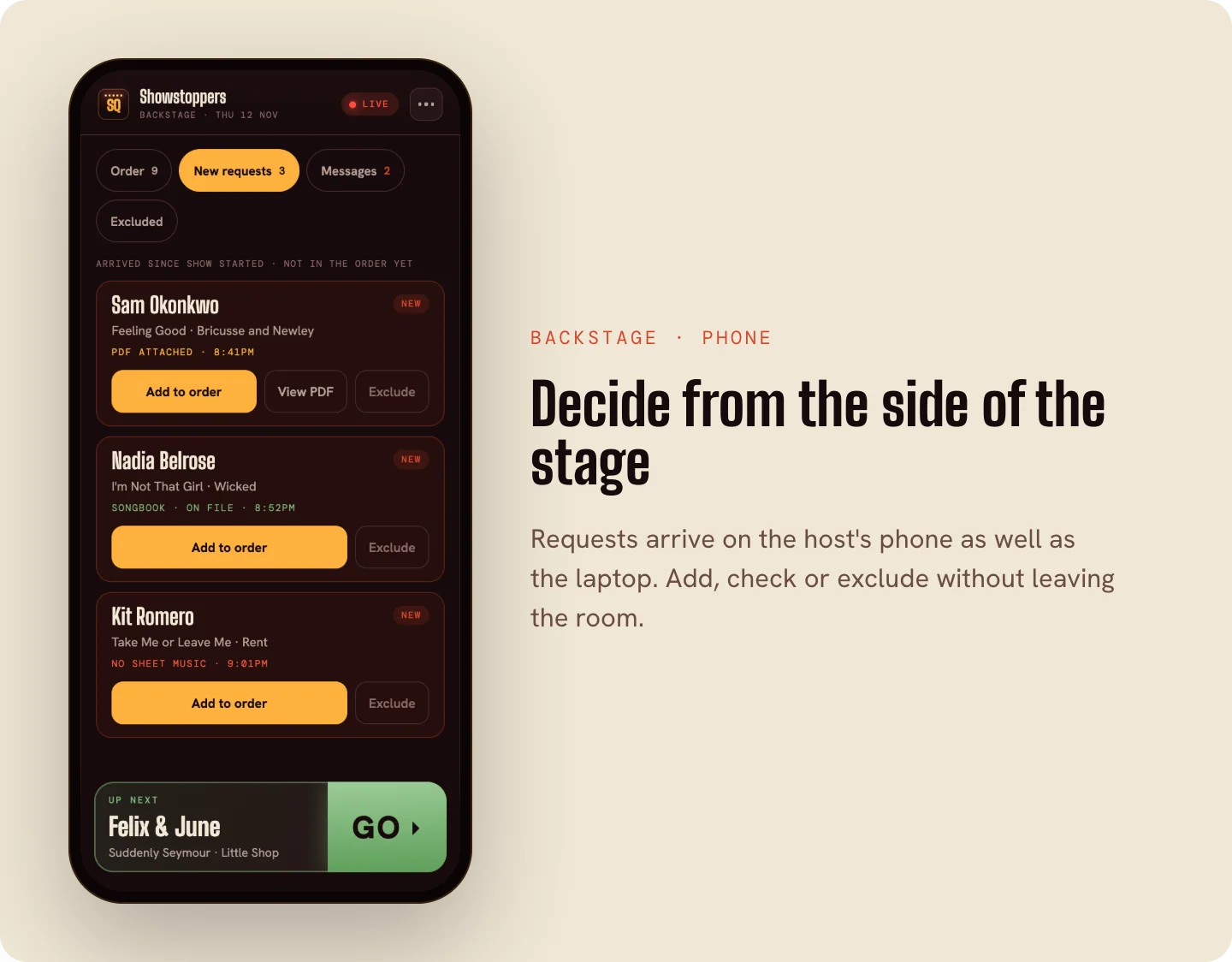
Once you start the show, new sign-ups land in Backstage's New requests queue instead, and nothing reaches the audience's Front Row Live view or the venue’s TV tuned to Big Screen until a host approves it into the running order or excludes it. The pill glows amber while something is waiting, and every request has an Edit action, so the name and song are fixed before anyone else sees them.
Where to slot them in
Fairness first. The people who signed up before doors expect to go before the people who did not. The default is the one FRIGID New York publishes for its open mic:
Your name will be added to the end of the list if you'd like to perform.
Late sign-ups go to the end. Deviate only on purpose:
- A hard exit. The babysitter, the last train. Move them up.
- Second songs after first songs. The Arts Council of York County honors a second slot only after everyone on the initial list has performed. Use that rule for a late request from someone who already sang.
Approving a request on StageQueue adds it to the running order; from there you drag it where it belongs, or use the Top, Bottom and Move to Up Next shortcuts, and "Find in running order" jumps from the queue to the row you just added. If someone walks up to the piano without touching the form, Quick Entry puts them at Up Next or the top with no sign-up at all. The room only ever sees the finished order.
Duplicates, wrong songs and jokes
Duplicates. The same name twice is just two taps to resolve: keep one, exclude the other. The same name with two different songs is a question for the performer. A name that already performed is a second slot; it goes after the original list.
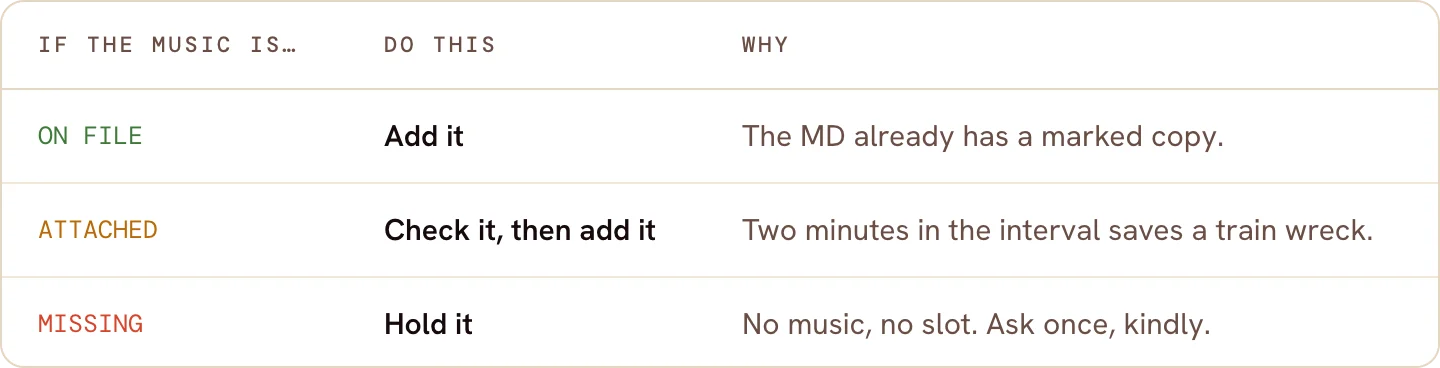
Wrong songs. A late sign-up with no sheet music, or a title that is not in your songbook, is still a performer who wants to sing. Fix the row before it goes on the screen: ask what they meant, pick the songbook version, or note that they will bring music over to the accompanist. A song already performed that show is the one case where "pick another" is the kind answer – allowing them to change their song choice is why we built this feature into StageQueue.
Jokes. Someone at the bar typed a name or a blue comment you will not read aloud. The filter is the host's eye. Exclude it, and as far as the room knows it never existed. Do not take the QR code down over one joke. Public sign-ups on StageQueue are rate-limited, so one bored phone warrior cannot fill the queue, and an excluded row stays in the Excluded list, restorable if the "joke" turns out to be a real stage name.
Closing sign-ups when you're full
Know your number before the show. Out Night, the cabaret I host at North Shore Music Theatre, runs 20 to 35 performer sign-ups a show, depending on the time we got started and how it’s pacing.
Two venue rules worth copying: the City of Pleasanton's open mic guidelines use a waiting list only if all scheduled acts finish more than 15 minutes before the scheduled end, and McKendree University's open mic rules say, "If space permits, we will allow more at end of show." The list closes; reopening is the host's call. Say "closed," not "full." Closed is a decision. Full is an invitation to argue.
On StageQueue, the Signups toggle in Backstage closes sign-ups for one show, before or during it; the audience’s view in Front Row Live shows "Signups closed" and the sign-up button leaves the UI until you switch it back on. If the last act finishes early, switch it on again.
Whatever is still waiting in New requests when you end the show is recorded as "Not reached" in the show wrap: a record, not a loss. If the performer wants to come to your next show, you can easily move the signup between shows in the StageQueue Admin portal.